


2026
Life through a screen
View Online

Sign up for a six month free
trial of The Stand Magazine!
Sometime around 405 A.D., a ruthless band of Irish marauders went ashore on the coast of Britain. The inhabi-tants of the countryside had no protection against the barbaric warriors who soon came upon a village. They enslaved many of the people there, taking them back to Ireland. Among them was a young man named Patrick. It was this one man’s faithfulness, however, that illuminated a heathen nation with the light of the gospel and left it forever changed.
An undeniable call
After his arrival in Ireland, Patrick was enslaved to a cruel Irish chieftain who may have been a Druid high priest. (The Druids, pagan religious leaders in Ireland, were known for human sacrifices, magic spells, and worship of the sun, wind, and rocks, among other things.) Forced to work as a shepherd, Patrick spent long days in the fields. During the six years of his enslavement, he turned to the God he had learned about in his youth and began to pray intensely. In his autobiography, The Confession of St. Patrick, he described experiencing the overwhelming love of God, akin to how a father comforts his son.
One night, Patrick had a dream in which he felt God telling him to escape. Making his way to the coast, he found passage on a ship transporting Irish wolfhounds to England. The ship was blown off course and wound up in France. Although it took several years, Patrick was eventually reunited with his family in Britain. But afterward, he felt strongly that God was calling him back to Ireland as a missionary – back to the very people who had kidnapped and enslaved him when he was a young teenager.
Patrick spent many years preparing for ministry. He had passed the age of 40 before he finally returned to Ireland accompanied by 12 monks. The Druid priests opposed him, but the Lord strengthened him, and he refused to surrender to fear.
In The Confession, Patrick wrote, “I am prepared to give even my life without hesitation and most gladly for His name, and it is [in Ireland] that I wish to spend it until I die.”
Patrick’s life was once again in danger on the night before Easter, which fell on a pagan festival celebrated at a place called Tara. Although King Loigaire forbade a fire be lit before the royal fire was roaring, Patrick lit a fire on top of the Hill of Slane to celebrate the resurrection of Christ.
The king was infuriated and ordered Patrick’s immediate death. But Patrick wielded his most powerful weapon: prayer. Patrick asked God to scatter his enemies, and as a result, the king’s soldiers were struck down. This led to the king and countless others turning to faith in God.
An indisputable legacy
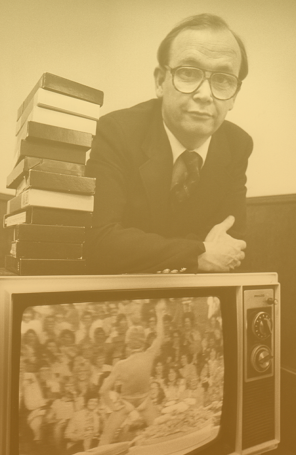
“It was one of those famous moments where [God] began to break the pagan stronghold over Ireland,” William J. Federer, host of American Minute and author of Saint Patrick, told The Stand.
During his 30 years as a missionary to Ireland, Patrick is said to have baptized over 120,000 people and founded 300 churches. Since that time, his legacy has extended well beyond fifth-century Ireland.
“He used the three-leaf clover to teach the Trinity: Father, Son, and the Holy Ghost, three in one. You have to remember the Druids were illiterate. … They couldn’t read or write. And so, he wanted to use things to convey spiritual concepts and doctrines, and that’s why the three-leaf clovers are always associated with St. Patrick,” Federer explained.
During the six years Patrick was enslaved in Ireland as a young man, he was able to learn the Irish language. So, when he returned to Ireland as a missionary, Patrick directly approached a great chieftain and presented the claims of Christ in his own language.
“Patrick’s style of evangelism was to go directly to the most important person and boldly proclaim the gospel,” Federer said. “It took courage and fearlessness, and I think that’s a message that needs to be remembered today.”

Sign up for a free six-month trial of
The Stand Magazine!
Sign up for free to receive notable blogs delivered to your email weekly.